
Puffy skin is one of those issues that shows up without warning and makes your face look different than it usually does. Some days you wake up with swollen eyes. Other days your jawline looks softer. Sometimes your cheeks feel warm or thick. It’s not a medical concern for most people, but it affects confidence and how “awake” you look.
What makes puffiness especially frustrating is that it shifts throughout the day. You can look sculpted in the morning and swollen by lunchtime. Or you can look puffy when you wake up and fine by evening. This inconsistency comes from changes in fluid movement, inflammation, circulation, and lymph flow.
Elderflower tea supports this in a very gentle and realistic way. It doesn’t force anything. It helps your body move fluid more evenly so the puffiness becomes less frequent and less intense. It’s one of the easiest herbal additions to a skincare-focused routine.
The Real Reason Skin Looks Puffy and Tired
Puffy skin is almost always a fluid distribution issue. Your skin isn’t “bigger.” It’s holding more water in certain areas because the body didn’t move that fluid out efficiently.
Common daily triggers include:
- sleeping on one side for hours
- eating a meal high in salt
- hormone shifts near your cycle
- being dehydrated
- stress-related inflammation
- long periods of stillness
- heat and humidity
- alcohol
- poor sleep quality
- intense screen exposure (less blinking slows drainage around the eyes)
The face exposes fluid imbalance faster than any other part of the body because the skin is thin and the lymph channels are delicate. A little stagnation shows up right away. That’s why some people say their face “gives away everything.”
Puffiness is not permanent. And it’s not the same thing as fat or aging. It is reversible, and elderflower helps make that process smoother.
What the Lymphatic System Actually Does for Your Face
Your lymphatic system is responsible for moving extra fluid, waste, and inflammation out of your tissues. It’s a drainage system without a pump. Instead, it relies on motion, warmth, hydration, and gentle pressure to keep things moving.
For your face, this system matters a lot.
Here’s why:
- The lymph network around the eyes, cheeks, and jaw is very close to the skin surface.
- These pathways can slow down from tiny changes like lack of movement or sleeping on your stomach.
- The lymph channels drain downward into the neck. Anything that tightens the jaw or neck area slows the entire system.
- Stress can cause shallow breathing, which reduces lymph flow in the upper chest and neck.
When lymph moves well, your face looks defined and awake. When it slows, fluid stays in the softest spots: under the eyes, along the jawline, and in the cheeks.
One of the best ways to help the lymph system is warmth and hydration. This is where elderflower tea fits beautifully.
Why Tea Helps Puffiness in the First Place
Before even getting into elderflower specifically, tea itself has qualities that support the face:
Warmth loosens tissue
Warm liquids soften tight facial muscles and encourage easier fluid movement.
Hydration helps thin and shift fluid
When your body is dehydrated, it holds onto water. Drinking tea helps reverse this.
Anti-inflammatory herbs calm reactive skin
Inflamed tissues retain more fluid.
Gentle diuretics reduce fluid load
Not aggressively, just enough to take the edge off swelling.
Slow sipping improves breathing
Deeper breathing helps activate lymph movement through the chest and neck.
These are simple mechanisms, but combined they create real changes in how your face looks across the day.
Where Elderflower Fits Into This Picture
Elderflower works well for puffy skin for a combination of reasons:
- It supports circulation just beneath the skin surface.
- It helps the body release fluid steadily rather than suddenly.
- It calms irritation, especially when the skin looks warm or inflamed.
- It interacts well with heat, hydration, and a slow sipping pace.
- It’s gentle enough for daily use, which is important for puffiness that repeats often.
Most herbs that help fluid movement feel strong or sharp. Elderflower is softer. That makes it ideal for the face, where the skin responds better to gentle approaches.
People usually notice:
- under-eye swelling softening
- better jawline definition
- less morning puffiness
- less swelling during hormone fluctuations
- less heat and redness in the cheeks
- a “lighter” feeling in the skin
Consistency is what makes the difference. Elderflower works best as a daily habit.
Puffy Skin and Slow Lymph Flow: Signs Elderflower Helps the Most
This is where elderflower tends to shine:
- mornings when your under-eyes look swollen
- puffiness around your cheeks
- jawline that loses shape as the day goes on
- cycle-related swelling in the lower face
- warmth or slight inflammation in the cheeks
- days when salty food makes your face look fuller
- heat-related swelling
- puffiness that feels soft instead of firm
These signs point to fluid stagnation or slow lymph flow, not deeper medical issues. Elderflower is a good match for this type of puffiness.
Elderflower vs Other Puffiness Teas
Different herbs help puffiness in different ways.
Here’s how elderflower compares:
Green tea
Strong antioxidants but stimulating. Great for clarity, not as targeted for swelling.
Dandelion leaf
Very effective for water loss, but can be too strong and dehydrating for facial use.
Hibiscus
Good for circulation but intense for some digestive systems.
Chamomile
Calming but not very influential on fluid movement.
Elderflower
Balanced. Gentle fluid release, tissue calm, and skin-friendly hydration support.
This is why elderflower shows up in facial steaming blends and skincare-focused herbal teas.
How to Use Elderflower Tea for Puffy Skin and Lymph Support
A few practical adjustments help bring out the best results.
Time of day
Drink it in the morning if you wake up puffy.
Drink it in the evening if swelling builds throughout the day.
Temperature
Warm tea works better than cold because warmth encourages lymph flow.
Frequency
Daily use brings more noticeable results than occasional use.
Pairing with a facial sweep
A quick massage along the jawline, cheekbones, and eye area while drinking helps release fluid.
Sip slowly
Fast drinking doesn’t activate the same circulation shifts as slow, mindful sipping.
Support with water
A glass of water after your tea helps ensure fluid moves where it should.
All of this adds up, especially during weeks when puffiness feels more intense.
A Simple De-Puffing Ritual with Elderflower Tea
A small routine can strengthen the effects of elderflower:
- Brew a warm cup of elderflower tea.
- Sit comfortably and take a few slow breaths.
- Sip steadily instead of gulping.
- Use two fingers to sweep gently from your chin toward your ears.
- Sweep from the sides of your nose toward your temples.
- Sweep down the sides of your neck, where lymph drains.
- Finish the cup and drink a small glass of water after.
This takes a few minutes but noticeably shifts morning or evening swelling.
How Long It Takes to Notice Results
The shifts happen gradually:
After the first cup
Skin feels warmer, softer, and less tight.
After a few days
Morning puffiness becomes lighter. Under-eye swelling decreases. Jawline definition improves slightly.
After a week
Your face holds less fluid overall. Swelling cycles become less intense. Days that would normally be puffy feel more manageable.
Every person is different, but this progression is common.
How Elderflower Fits Into a Lymph-Friendly Lifestyle
Puffiness improves fastest when elderflower is combined with a few simple habits:
- move your body regularly
- stretch your neck gently
- drink enough water
- avoid sleeping face-down
- keep salt intake balanced
- do quick facial sweeps to support drainage
- avoid tight collars or jaw tension
Elderflower works alongside these habits to make fluid movement easier and more consistent.
Safety Notes
Elderflower is gentle, but these points matter:
- it has a mild diuretic effect
- avoid combining with prescription diuretics unless advised
- check with a professional if pregnant or breastfeeding
- only use dried blossoms, not leaves or stems
- persistent swelling or firm swelling should be evaluated medically
For superficial puffiness, elderflower is one of the safest and easiest options.
How to Choose a High-Quality Elderflower Tea
Quality makes a noticeable difference with skin results. Look for:
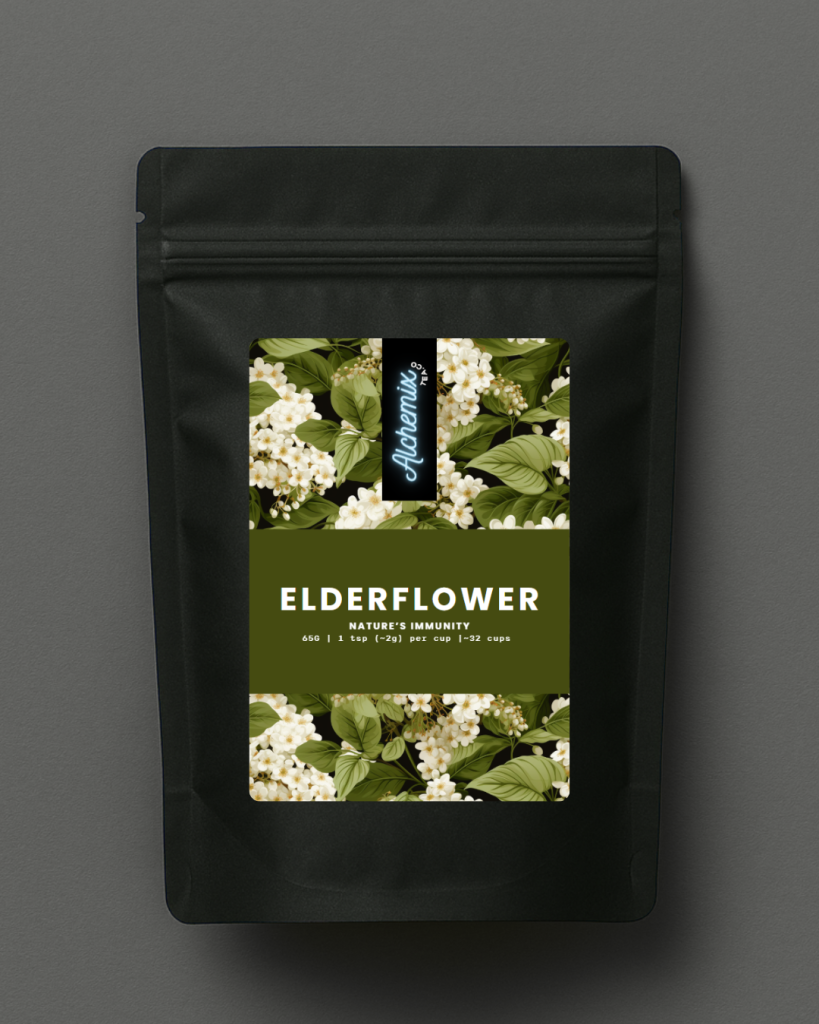
- whole, intact blossoms. (Alchemix elderflower tea uses whole blossoms dried)
- a light floral scent
- pale golden color
- no bitterness
- no additives or filler herbs
Fresh elderflower supports the skin more effectively because the floral oils and compounds are still present.
Puffy skin is usually a sign that your body is holding onto fluid in the wrong places, not a sign of aging or damage. Elderflower tea gives your body gentle, reliable support to help fluid move where it should. With steady use, it becomes a simple daily ritual that helps your face feel lighter, calmer, and more defined. If you’re ready to try a tea that helps your face feel lighter and more defined, you can pick up a pouch of our elderflower blossoms.
Related Articles





-
Soursop Tea
$ 19.00 – $ 52.00 -

Everyday Matcha
$ 19.00 – $ 49.00 -

Butterfly Pea Tea
$ 15.99 – $ 45.00 -
Matcha Bowl
$ 35.00
 We do loose leaves that you can taste and non of that dusty stuff in a bag.