
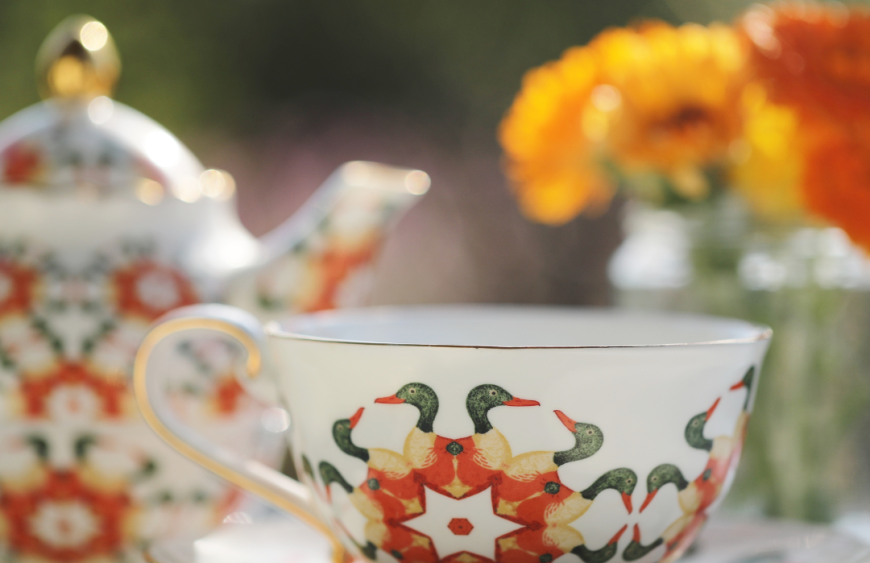
Calendula is very good at getting noticed.
Those golden-orange petals can make even the most sensible loose-leaf blend look like it has dressed up for the occasion. Add a teapot, a couple of Southland cheese rolls and five consecutive minutes of sunshine and you’ve got yourself quite the afternoon.
But we don’t choose ingredients just because they look good in the packet.
So, is calendula actually worth drinking on its own, or is it better in a tea blend?
Our vote goes to the blend.
Pure calendula gives you a simple way to experience the flower by itself, but its flavour is relatively gentle. Put it alongside tart hibiscus, berries, earthy roots and proper tea leaves, and there’s far more happening in your cup.
Calendula tea vs a calendula blend
| Pure calendula tea | Calendula in a tea blend |
|---|---|
| Gentle botanical character | More layered flavour |
| Lets you experience calendula by itself | Other ingredients provide contrast |
| Good for exploring individual botanicals | Better suited to a fuller everyday cup |
| Simple single-ingredient infusion | Can combine floral, tart, fruity and earthy flavours |
Choose pure calendula if you’re curious about the flower itself or prefer delicate herbal infusions.
Choose a blend if flavour is your priority and you want something with more depth.
What does calendula tea taste like?
Those bright petals make calendula look like it should taste intensely floral.
It doesn’t.
Calendula is much gentler in the cup, with a mild botanical character rather than a big perfumed flavour. If you’ve ever had a floral tea that felt rather like drinking your grandmother’s perfume cabinet, calendula isn’t that.
That subtlety makes it particularly easy to blend.
Pair calendula with:
- hibiscus for tartness and deeper colour
- berries for fruitier notes
- green tea for recognisable tea character
- yerba mate for another distinctive layer
- burdock root for earthy depth
Instead of competing with those stronger flavours, calendula can sit comfortably amongst them.
When is calendula better on its own?
There’s one very good reason to brew pure calendula: you want to know what calendula tastes like.
Tasting botanicals individually helps you understand what they contribute to a finished blend. Brew calendula petals by themselves and there’s nowhere for the flavour to hide.
It’s worth trying if:
- you like delicate herbal teas
- you’re experimenting with your own blends
- you’re learning about individual botanicals
- you want a simple, single-ingredient infusion
Think of it like tasting a good Southland cheddar before putting it into a cheese roll. Trying the ingredient separately helps you understand what it brings to the finished result.
Why does calendula work so well in tea blends?
A good blend needs contrast.
If every ingredient is intensely floral, bitter, tart or sweet, the finished cup quickly becomes hard work. Calendula leaves room for stronger ingredients to do their thing.
That’s the difference between a long ingredient list and a good blend.
More ingredients don’t automatically make better tea. They need to make sense together.
One might bring tartness. Another provides body. Another contributes aroma or fruitiness. Get those relationships right and you have a cup that feels balanced rather than crowded.
So if you’ve spotted calendula on a tea label, don’t look at the petals alone. Look at what’s sitting beside them.
A calendula and mint blend will drink very differently from one containing hibiscus, green tea, berries and roots.
Ask yourself:
- Is the blend likely to be floral, fruity, tart or earthy?
- Does it contain actual tea leaves?
- Does it contain caffeine?
- Most importantly, does it sound like something you’d actually enjoy drinking?
There’s no prize for owning the most impressive-looking packet at the back of the pantry.
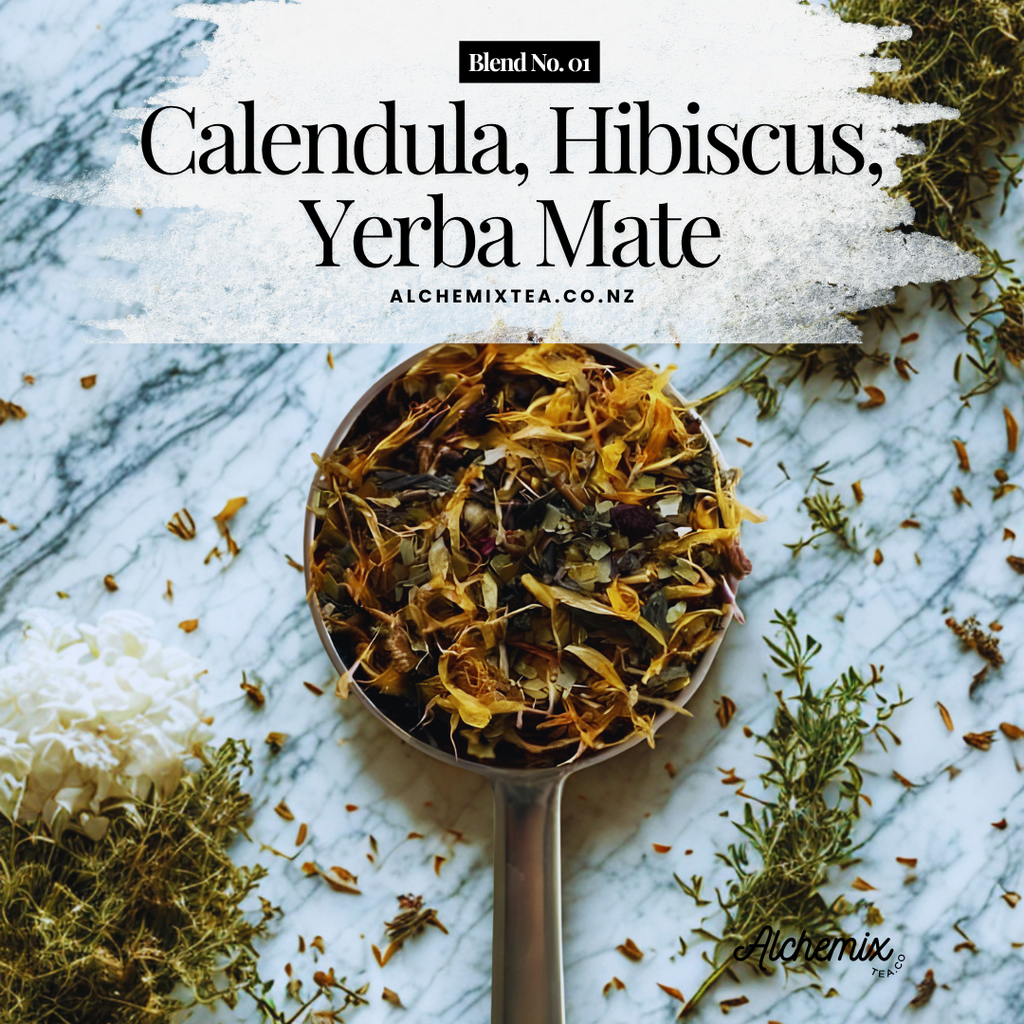
Why we use calendula in Blend No.01
Blend No.01 is a good example of why we prefer calendula with company.
We’ve paired calendula petals with:
- yerba mate
- hibiscus flowers
- dandelion leaf
- burdock root
- green tea
- schisandra berry
- garcinia cambogia
- acai berry
It’s a much bolder setting for such a subtle flower.
Hibiscus brings tartness and colour. Burdock root gives the blend a deeper, earthier note. Green tea and yerba mate add structure, while the berries bring another layer to the cup.
Calendula runs through the blend in flashes of gold.
Blend No.01 works through contrast: tart against earthy, fruit against leaf, bright petals against deeper botanicals.
That’s what we’re looking for in a loose-leaf blend. Recognisable ingredients, different flavours doing different jobs, and a finished cup that’s more interesting than any one ingredient on its own.
Does Blend No.01 contain caffeine?
Yes.
Blend No.01 contains green tea and yerba mate, which are natural sources of caffeine. Caffeine occurs naturally in both green tea and yerba mate.
So if you’re specifically looking for a caffeine-free herbal tea, Blend No.01 isn’t the one we’d choose.
It’s also a good reminder to read the full ingredient list. Calendula might be what caught your eye, but it doesn’t tell you everything about the cup.
The same applies when you’re choosing black tea. Pay attention to what you’re actually brewing, not just the name on the packet.
What should you check when buying calendula tea?
Calendula appears in both single-ingredient infusions and more complex blends, so start with the full ingredient list.
Look at the other botanicals.
Hibiscus, berries, mint, roots and tea leaves can have a much bigger influence on the finished flavour than calendula itself.
Check whether it contains caffeine.
Calendula itself isn’t a source of caffeine, but a blend containing green tea or yerba mate is.
Look for recognisable ingredients.
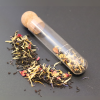
One of the pleasures of loose leaf is being able to see the leaves, petals, roots and berries you’re brewing.
Buy for flavour.
An impressive ingredient list isn’t much use if you don’t want a second cup.
If you’re interested in exploring other botanicals, our guide to milk thistle tea looks at another ingredient you’ll find across the Alchemix range. If pregnancy-specific herbal tea is what you’re researching, we’ve covered raspberry leaf tea separately.
Calendula tea FAQs
Can you drink calendula petals as tea?
Calendula flowers have historically been prepared as herbal infusions to treat skin conditions, digestive issues, and internal inflammation. It was a traditional remedy to soothe stomach ulcers, support overall liver detox function, and calm general gastrointestinal inflammation. If you’re buying calendula specifically to drink, choose a product intended for food or tea use rather than ornamental flowers.
What does calendula tea taste like?
Calendula has a relatively gentle botanical character. Despite its bright appearance, it isn’t an intensely perfumed floral ingredient.
Is calendula better on its own or in a blend?
For learning about calendula itself, try it alone.
For a more interesting everyday cup, we’d choose a blend. Other botanicals can bring tartness, fruit, earthiness and body around calendula’s gentler character.
What flavours go well with calendula?
Calendula works well with stronger flavours because it isn’t overpowering. We particularly like it alongside tart hibiscus, berries, earthy roots and tea leaves.
Does calendula tea have caffeine?
Calendula itself isn’t a source of caffeine, but a calendula blend may contain caffeine depending on its other ingredients.
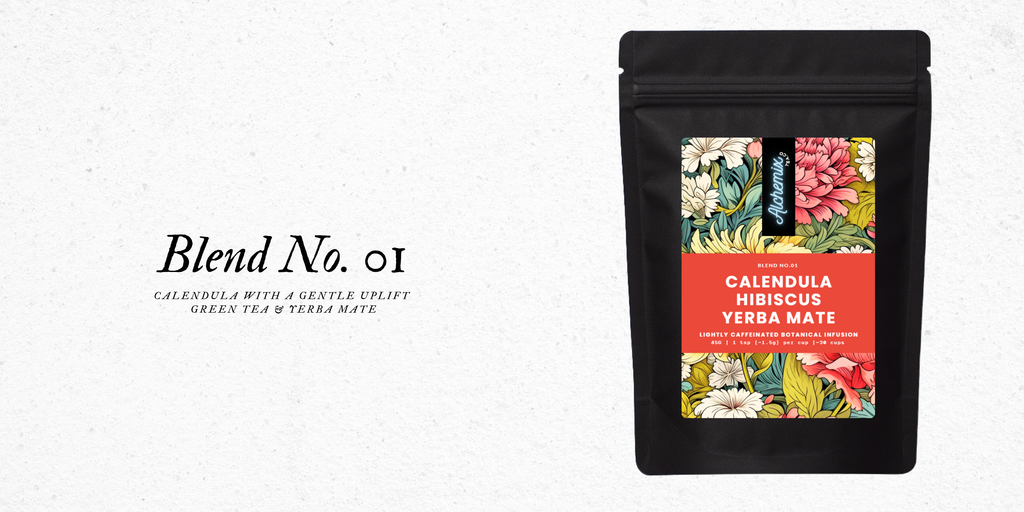
Blend No.01 contains green tea and yerba mate, so it isn’t caffeine-free.
Is calendula the same as marigold?
Calendula is often called pot marigold, but not every flower commonly called a marigold is Calendula officinalis. If you’re buying calendula to consume, check the botanical name and make sure it’s intended for food or tea use.
So, should you drink calendula alone or blended?
If you’ve never tasted calendula before, brewing the petals alone is worth doing once. You’ll discover a botanical that’s considerably quieter than its bright appearance suggests.
But for the tea cupboard, we’ll take the blend.
Tart hibiscus. Earthy burdock. Berries. Green tea. Yerba mate. Calendula earns its place amongst them as part of a fuller, more interesting cup.
If you’re curious about calendula but want more flavour than a simple flower infusion, try Blend No.01.
Real leaves, roots, berries and botanicals, blended for a cup with plenty of character. Cheese rolls still optional.
Related Articles




-
Stainless Steel Tea Infuser
$ 18.00 -
Peppermint Tea
$ 17.50 – $ 52.00 -
Matcha Scoop
$ 7.00 -
Soursop Tea
$ 19.00 – $ 52.00
 We do loose leaves that you can taste and non of that dusty stuff in a bag.