
By the third trimester, raspberry leaf tea has a habit of appearing in conversation.
Your midwife might mention it. A friend might swear by it. Someone in your antenatal group is probably already drinking it. And once you start looking online, you’ll find plenty of opinions about when to start, how much to drink and what raspberry leaf tea is supposed to do.
There’s a reason it’s stuck around.
Raspberry leaf tea has a long history of use during later pregnancy, particularly in preparation for labour. While modern research hasn’t confirmed all the claims surrounding it, raspberry leaf remains one of the botanicals most closely associated with the final weeks of pregnancy.
Thinking about trying it? Here are the answers to the questions that actually matter.
What is raspberry leaf tea?
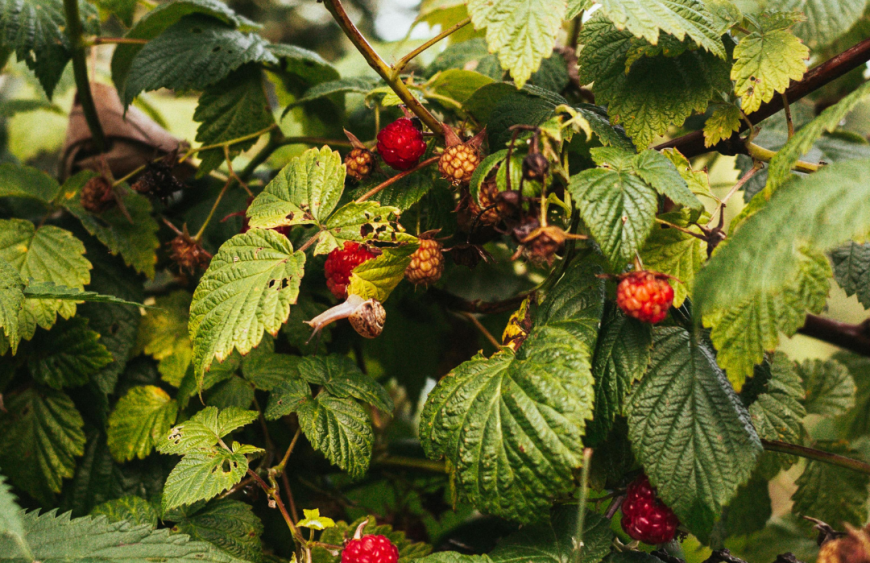
Raspberry leaf tea is made from the leaves of the raspberry plant, Rubus idaeus, not the fruit.
And despite the name, it doesn’t taste like raspberries.
Plain raspberry leaf is earthy, leafy and mellow. Some people enjoy it exactly like that. Others want raspberry leaf with a little more flavour.
That second group is exactly who we made Blend No.02 for.

Why do women drink raspberry leaf tea in the third trimester?
Raspberry leaf has traditionally been used during later pregnancy in preparation for labour. Its traditional pregnancy use is the main reason it remains such a popular third-trimester botanical.
There’s also some interesting research behind that tradition:
- It has traditionally been associated with preparation for labour. Modern researchers have investigated raspberry leaf in relation to uterine muscle and labour, although the overall evidence remains limited.
- Some human research has reported interesting outcomes. A clinical trial involving 192 first-time mothers observed a shorter second stage of labour and fewer forceps births among the raspberry leaf group, although the differences weren’t statistically significant and the study used tablets rather than tea.
- More recent research has kept the conversation going. A small observational study reported several favourable labour outcomes among raspberry leaf users. Because it was observational, it can’t tell us that raspberry leaf caused them.
So, is raspberry leaf guaranteed to give you a shorter or easier labour? No.
But it has a genuine tradition of use during the third trimester, backed by enough research interest to make it considerably more than the latest wellness fad.
When should you start drinking raspberry leaf tea?
Raspberry leaf is most commonly associated with later pregnancy.
You’ll often see 32 weeks mentioned because a well-known raspberry leaf study introduced supplementation from that point. There isn’t, however, one established starting week that’s right for every pregnancy.
If you’re in your third trimester and keen to try raspberry leaf tea, check with your midwife, obstetrician or maternity healthcare professional about when it’s appropriate for you.
How much raspberry leaf tea should you drink?
There isn’t one established number of cups that applies to everyone.
Research has used different preparations and quantities, including raspberry leaf tablets rather than brewed tea, so we wouldn’t turn those studies into a blanket cups-per-day recommendation.
Once your maternity healthcare professional is happy for you to drink raspberry leaf tea, ask what amount suits your pregnancy.
Is raspberry leaf tea safe during pregnancy?
Available human research hasn’t identified major safety concerns among the women studied. A clinical trial reported no adverse effects for mothers or babies from the raspberry leaf preparation used, although the overall research base remains relatively small.
The practical answer is simple: check with the healthcare professional looking after your pregnancy before you start.
Then you can get back to the much more interesting question of which raspberry leaf tea to buy.
Does raspberry leaf tea taste like raspberries?
No.
Plain raspberry leaf has a mellow, earthy and leafy flavour rather than a sweet berry taste.
And this is where we think raspberry leaf tea could do with a little help.
If you’re planning to drink it throughout your third trimester, you shouldn’t have to tolerate the flavour just because you want the raspberry leaf.
You can have both.
Is pure raspberry leaf tea or a blend better?
It depends on what you want from your cup. Choose pure raspberry leaf if you like straightforward, earthy herbal teas and want nothing but the leaf. Choose a raspberry leaf blend if you want the raspberry leaf alongside botanicals that add more fruit, brightness, aroma and colour.
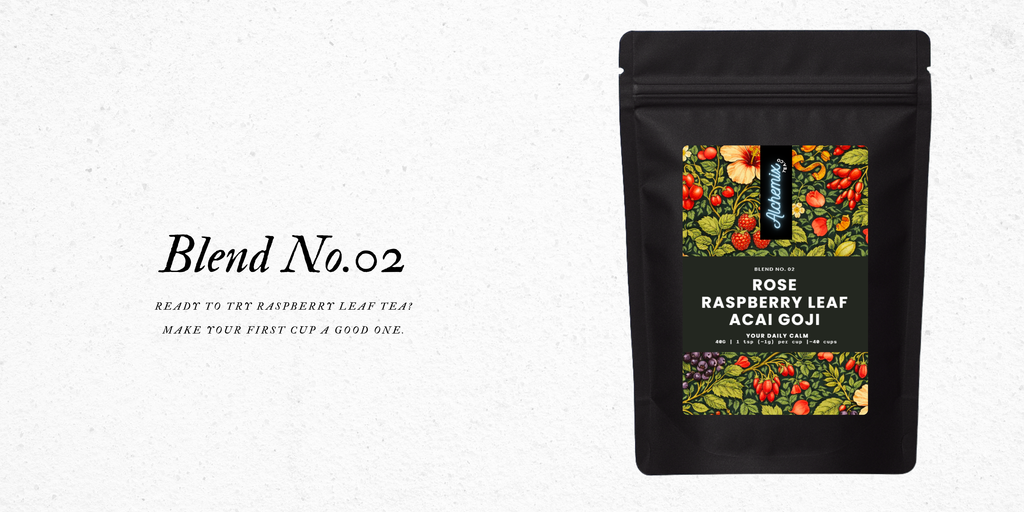
That’s exactly how we approached Blend No.02.
It contains:
Organic at source Raspberry Leaf, Hibiscus, Acai Berry, Hawthorn Berry, Goji Berry, Rose Petals and Mandarin Peel.
The raspberry leaf gives it an earthy botanical base. Hibiscus and berries bring bright tartness and deeper colour, rose petals add a softer floral note, and mandarin peel gives the finish a clean citrus lift.
We haven’t added seven botanicals so we can give you seven pregnancy claims.
We’ve added them because they make a better cup of raspberry leaf tea.
Why choose Alchemix Blend No.02?
Because if you’ve decided you want raspberry leaf tea for your third trimester, the next question is whether you’ll actually enjoy drinking it.
Blend No.02 gives you:
- Raspberry leaf at the heart of the blend
- Real botanicals rather than artificial raspberry flavour
- A brighter, fruitier alternative to plain raspberry leaf
- Loose leaf, so you can see what you’re brewing
- A deep, vibrant cup with berry, floral and citrus character
- Organic-at-source raspberry leaf
It’s the same flavour-first approach we take when choosing black tea. Ingredients matter, but the finished cup still has to earn its place in your cupboard.
How do you brew Blend No.02?
Keep it simple.
Use 1 to 2 teaspoons per cup and steep at around 93°C for 5 to 7 minutes.
Prefer it lighter? Stick closer to five minutes.
Want more berry tartness and depth? Give it a little longer.
Blend No.02 is also excellent chilled. Brew it slightly stronger, allow it to cool and pour over ice. The hibiscus, berries and mandarin work particularly well cold.
If botanical teas are becoming more your thing, you can also explore the striking colour of butterfly pea tea or the lighter floral character of elderflower tea.
Is raspberry leaf tea worth trying in your third trimester?
If you’re interested in raspberry leaf because of its traditional association with later pregnancy, yes, we think it’s well worth considering.
It has a long history of use during this stage of pregnancy and some interesting research behind that tradition. What it doesn’t have is a guarantee about how your labour will unfold, and we’d be wary of anyone selling it that way.
Once you’ve checked that raspberry leaf is appropriate for you, there’s no reason your third-trimester tea needs to be a dull cup of plain leaves.
Blend No.02 combines organic-at-source raspberry leaf with hibiscus, acai, hawthorn and goji berries, rose petals and mandarin peel for a bright, tart-sweet, floral cup with a clean citrus finish.
You’re already considering raspberry leaf. Choose one you’ll actually look forward to drinking. Check out Blend No.02 here.
Related Articles




-
Matcha Scoop
$ 7.00 -
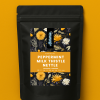
Blend No.03 - Peppermint, Milk Thistle, Nettle
$ 15.99 – $ 42.00 -
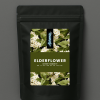
Elderflower Tea
$ 15.00 – $ 39.00 -
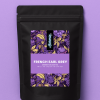
French Earl Grey
$ 19.00 – $ 49.00 -
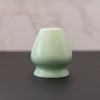
Chasen Stand
$ 17.00
 We do loose leaves that you can taste and non of that dusty stuff in a bag.