
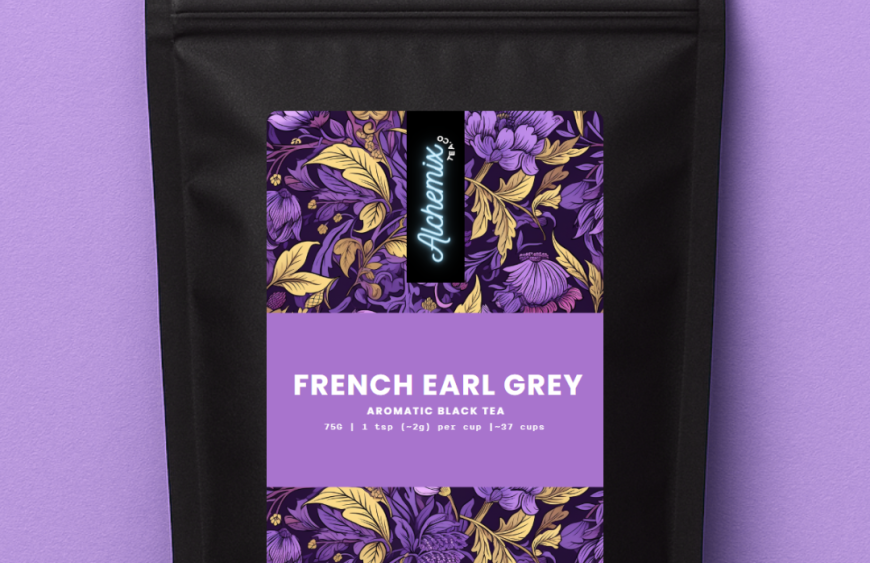
French Earl Grey has become one of those teas you see everywhere, in café menus, online tea shops, even supermarket shelves. It’s floral, fragrant, and a little mysterious. But despite how often it shows up, most people still don’t really know what it is… or how to drink it properly.
Should you add milk? What does it even taste like? Is it just Earl Grey with a fancier name?
In this guide, we’re answering the most searched questions about French Earl Grey — including what’s in it, how it’s different from the classic version, and whether it actually deserves a spot in your tea rotation.
What Is French Earl Grey Tea?
French Earl Grey is a modern take on the classic Earl Grey but with a softer, more aromatic edge.
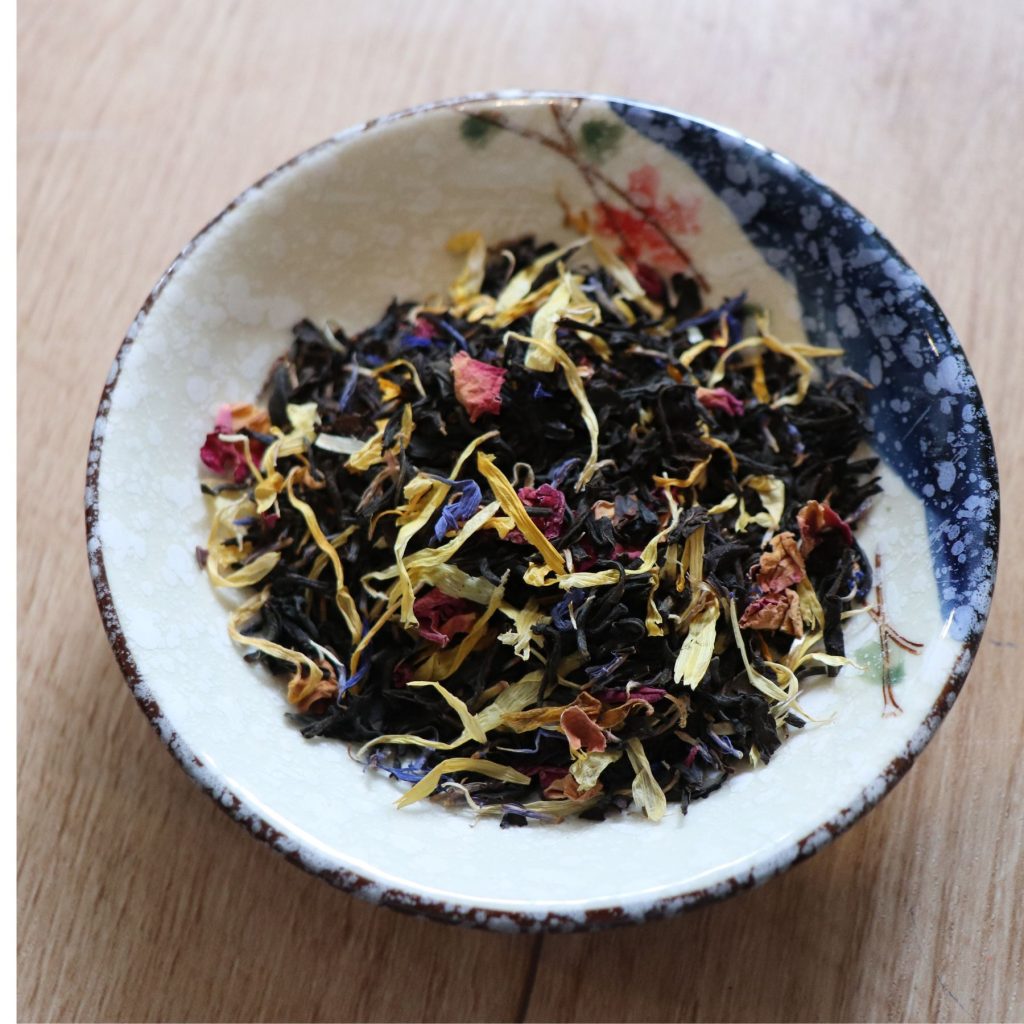
At its core, it’s still black tea flavoured with bergamot oil, the citrusy essence that gives Earl Grey its signature scent. But French Earl Grey adds something extra: botanicals. Think rose petals, calendula, cornflowers — sometimes even fruit notes like peach or citrus peel.
The result? A blend that still feels bold but carries a floral lift. It’s more rounded, less sharp, and often more drinkable without milk. The florals don’t just look good, they help balance the bergamot and add a kind of lightness that classic Earl Grey sometimes lacks.
French Earl Grey isn’t a single standard recipe. It varies by brand but if it includes florals + bergamot + black tea, you’re in the right zone.
What Does French Earl Grey Taste Like?
In short: it tastes like Earl Grey, but less harsh and more balanced.
The black tea gives it structure and depth, while the bergamot brings that familiar citrusy lift. But what makes French Earl Grey stand out is the addition of real florals — usually rose petals, calendula, and cornflowers. These soften the edge of the citrus, round out the flavour, and give it a lightly perfumed finish (without veering into soap territory).
A good French Earl Grey should taste:
- Floral, but not overpowering
- Citrusy, but not acidic
- Smooth, not bitter
Poor versions can taste flat or artificial — especially if they rely on flavouring rather than actual botanicals. But when done well, French Earl Grey is layered, aromatic, and easy to drink black.
Does French Earl Grey Contain Caffeine?
Yes. French Earl Grey is made with black tea, which naturally contains caffeine.
On average, you’ll get around 40 to 60 mg of caffeine per cup, depending on the type of tea leaf, the amount used, and how long you steep it. That’s less than coffee, but still enough to give you a gentle lift — especially in the morning or early afternoon.
Compared to English Breakfast tea, the caffeine content is roughly the same, but the experience is different:
| Tea Type | Caffeine per cup | Flavour profile | Typical use |
|---|---|---|---|
| French Earl Grey | 40–60 mg | Smooth, floral, citrusy | Light, aromatic morning or afternoon tea |
| English Breakfast | 40–70 mg | Strong, malty, bold | Traditional breakfast tea, often with milk |
French Earl Grey often feels lighter and less aggressive due to its floral ingredients and more delicate black tea base. English Breakfast leans bolder, with a brisker profile, it’s the one you pair with toast, eggs, and a full morning push.
If you’re sensitive to caffeine, you can dial it down in either tea by doing a 30-second rinse steep and discarding that first pour. Or, just steep your tea for 2–3 minutes instead of 5.
French Earl Grey isn’t a sleepy herbal tea, but it’s not a full caffeine blast either. Think of it as a more elegant, steady energy boost, especially if you want something less punchy than English Breakfast.
Is French Earl Grey Safe During Pregnancy and Breastfeeding?
Short answer: In moderation, yes, but it depends on your total caffeine intake and individual circumstances. Always check with your midwife or GP.
French Earl Grey is a black tea, so it naturally contains caffeine, typically 40–60mg per cup depending on the strength and steep time.
For comparison:
- A standard cup of brewed coffee contains around 95–120mg of caffeine
- French Earl Grey comes in at about half that, making it a gentler option
Most health guidelines recommend pregnant and breastfeeding people keep their daily caffeine intake under 200mg, which means one to two cups of French Earl Grey is usually well within safe limits.
Other things to consider:
- Bergamot oil, used to flavour Earl Grey, is safe in tea-level quantities. You’re not consuming concentrated essential oil, it’s a small infusion.
- Botanicals like rose, calendula, and cornflowers are considered safe when consumed in food-level amounts. That said, if you’re avoiding all herbs or florals, double-check with your provider.
- Choose loose-leaf, clean blends (here’s a bag that has just that), no added flavourings, sweeteners, or unknown “natural essence”. The simpler, the better.
Do You Add Milk to French Earl Grey Tea?
Short answer: you can, but you don’t need to.
French Earl Grey is typically blended to be smoother and more delicate than the classic version, which means it often drinks well without milk. The added florals like rose and calendula round out the sharpness of the bergamot, giving it a softer finish that doesn’t need muting.
That said, if you’re someone who prefers a creamier cup or wants a bit more body, milk (or oat milk) still works. Just go easy, too much can dull the more nuanced flavours. You want to soften the edges, not smother them.
Tips for best results:
- Use water around 90–95°C, not boiling
- Steep for 2–3 minutes max to avoid bitterness
- Try it black first — you might not reach for milk at all
Milk is optional. Quality isn’t.
Is French Earl Grey Good for You?
French Earl Grey isn’t marketed as a “wellness tea” but it does have some quiet health perks.
At its core, it’s a black tea, which means it contains antioxidants (primarily theaflavins and catechins) that support circulation, digestion, and cellular health. The bergamot oil may also offer gentle mood-lifting effects and support cholesterol balance, though you’re not getting a concentrated dose in a single cup.
The added florals like rose petals, calendula, and cornflowers don’t just look pretty. They often come with traditional uses in skin support, calming digestion, or reducing inflammation. While their impact in tea form is subtle, they make the overall blend cleaner and easier on the system than heavily flavoured or sweetened teas.
The real win?
- No sugar
- No additives
- No artificial flavouring (if you’re buying the right one)
So yes, French Earl Grey is good for you in the way that clean, real ingredients always are. It won’t change your life, but it’s a genuinely better swap for sugary drinks or bitter supermarket blends.
What to Look for in a Good French Earl Grey
Like most teas, not all French Earl Greys are created equal. Some smell incredible in the bag but brew into something flat, bitter, or artificially perfumed. The difference almost always comes down to ingredients and format.
Here’s what to look for:
- Loose leaf over bags – You’ll get fuller flavour and visible botanicals.
- Actual florals – Rose petals, calendula, cornflowers. You should see them, not just read about them.
- Natural bergamot oil – Not “bergamot flavour” or “essence”. The real stuff makes all the difference.
- A smooth black tea base – Ceylon or blended black tea works well, but it shouldn’t be dusty or bitter.
- No weird extras – If the label mentions sugar, sweeteners, or preservatives… skip it.
At Alchemix, we built our French Earl Grey around exactly this.
- Whole-leaf black tea
- Real rose petals, calendula, and cornflowers
- Natural bergamot oil, no synthetic flavouring
- Loose leaf only, packed fresh, not sitting in a warehouse for a year
It’s designed to be soft, clean, and balanced, whether you drink it black or splash in a little milk. If you’ve written off Earl Grey before, this one might change your mind.
Final Word: Try It Your Way, Just Start with Something Real
French Earl Grey isn’t complicated, but the flavour depends entirely on the quality of what you’re brewing. If you’ve only ever had the bagged version with “natural flavour” listed and no actual petals in sight, you haven’t tasted the real thing yet.
Whether you add milk, sip it black, or serve it over ice, the key is starting with a blend that doesn’t rely on artificial scent to do the heavy lifting.
We made ours with actual ingredients, no filler, no perfume, no flavouring tricks. Just proper black tea, real florals, and natural bergamot oil.
Related Articles

-
Elderflower Tea
$ 15.00 – $ 39.00 -
Reusable Tea Bags (Set of 5)
$ 15.00 -
Butterfly Pea Tea
$ 15.99 – $ 45.00 -
Matcha Bowl
$ 35.00 -
Eco Brew Bags
$ 5.99 – $ 17.99
 We do loose leaves that you can taste and non of that dusty stuff in a bag.