
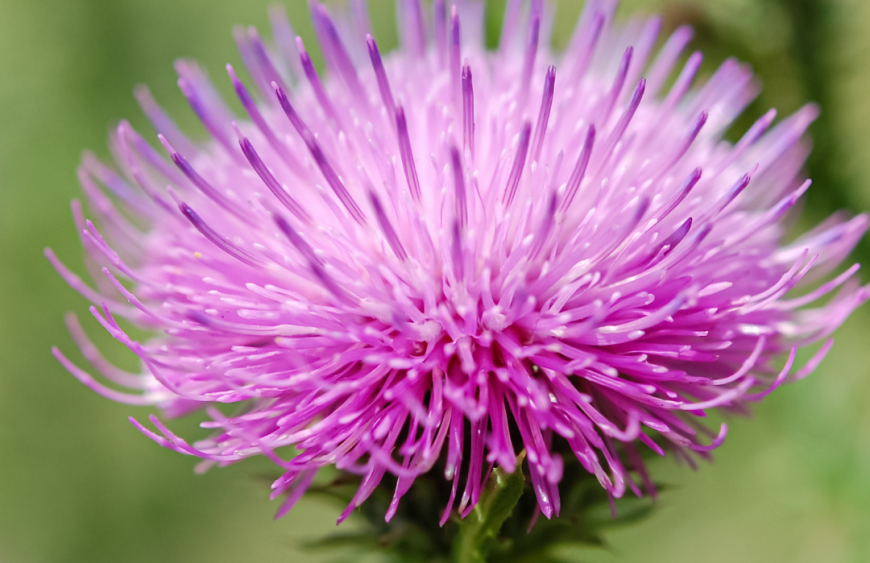
When you’re breastfeeding, even making a cup of herbal tea can suddenly come with questions. Milk thistle is an especially interesting one. It has a long history of traditional use, turns up in breastfeeding blends, and is often associated with milk supply.
So, can you drink milk thistle tea while breastfeeding?
The short answer is yes. Milk thistle has a long history of traditional use during breastfeeding, and the available lactation research is reassuring.
Milk thistle is traditionally known as a galactagogue, which simply means a herb used with the intention of supporting breast milk production. Modern research hasn’t proven that drinking milk thistle tea increases milk supply, but LactMed’s current milk thistle research provides some reassuring information about its use during breastfeeding.
And there’s another reason to be interested in milk thistle: it makes a surprisingly good addition to botanical tea.
Earthy, mellow and easy to pair with fresher herbs and citrus, it’s an ingredient that works particularly well when it’s part of a balanced blend.
Milk thistle and breastfeeding at a glance
| If you’re wondering… | Here’s the short answer |
|---|---|
| Can I drink milk thistle tea while breastfeeding? | Yes. It has a long history of traditional use, and available lactation information is reassuring. |
| Does it increase milk supply? | It’s traditionally used for this purpose, but milk thistle tea hasn’t been clinically proven to increase supply. |
| Does milk thistle have caffeine? | No. Milk thistle itself isn’t a source of caffeine. |
| Is tea the same as a milk thistle supplement? | No. Concentrated extracts and an infused herbal tea are quite different products. |
| What does it taste like? | Earthy and botanical. It works particularly well with fresh herbs and citrus flavours. |
Why do breastfeeding mums drink milk thistle?
Milk thistle’s connection with breastfeeding isn’t new.
It has traditionally been used as a galactagogue, the not-particularly-catchy name given to herbs, foods and medicines used with the intention of supporting breast milk production.
That traditional use is why you’ll often see milk thistle mentioned in breastfeeding conversations and included in botanical blends.
Researchers have taken an interest too. Some studies have looked at purified silymarin preparations derived from milk thistle and milk production. However, the breastfeeding evidence doesn’t establish that ordinary milk thistle tea increases milk supply.
Our approach is simpler.
We respect the traditional use without turning it into a promise. If you enjoy milk thistle tea while breastfeeding, you don’t need a dramatic health claim to justify putting the kettle on.
What does the research tell us?
There’s some reassuring information here.
Milk thistle fruit contains a group of compounds collectively known as silymarin. LactMed reports in its lactation research that silymarin components weren’t found in measurable amounts in breast milk in the studies it reviews. It also notes that these compounds are poorly absorbed orally, making adverse effects in breastfed infants unlikely.
The important thing is to keep the product in perspective.
A cup of milk thistle tea isn’t the same thing as taking a concentrated milk thistle or silymarin supplement.
Milk thistle tea and supplements aren’t the same thing
If you’ve searched for milk thistle online, you’ve probably seen teas, capsules, powders and extracts sitting under the same broad umbrella.
They aren’t interchangeable.
| Milk thistle tea | Milk thistle supplements |
|---|---|
| Made by infusing botanical material in water | Often made with concentrated extracts |
| Enjoyed as a drink | Usually taken for a specific intended purpose |
| Strength depends on the tea and how you brew it | Typically supplied in measured amounts |
| Often blended with other botanicals | Often focused on milk thistle or silymarin |
| Flavour matters | Flavour is very much not the point |
For an everyday cup, we’re firmly in the tea camp.
Loose leaf also means you can see the leaves, roots, flowers and peel going into your brew rather than relying on anonymous powder in a bag. There are plenty of practical loose leaf benefits, particularly if you want more control over how much tea you use and how long you brew it.
What does milk thistle tea actually taste like?
Milk thistle isn’t a loud ingredient.
It has an earthy, botanical character, so it works particularly well when you give it some brighter company.
Think:
- fresh peppermint
- fragrant lemon myrtle
- bright orange peel
- earthy roots
- leafy botanicals
- a little natural sweetness
It’s not a botanical that needs to dominate the cup. In fact, we think it’s better when it doesn’t.
If you enjoy exploring more unusual botanicals, butterfly pea tea sits at almost the opposite end of the attention-seeking scale. Butterfly pea turns your tea a striking blue. Milk thistle quietly gets on with its job.
There’s room in the cupboard for both.
What should you look for in a milk thistle tea?
The big thing is not to get distracted by one fashionable ingredient on the front of the packet.
If you’re choosing a botanical tea while breastfeeding, look at the whole blend.
A few quick checks help:
- Read every ingredient. You’re drinking the complete blend, not just the milk thistle.
- Check the caffeine. Milk thistle itself isn’t a source of caffeine, but another ingredient in the blend could be.
- Know whether you’re buying tea or an extract. They aren’t the same thing.
- Choose something that sounds good to drink. Earthy milk thistle is much more interesting when balanced with fresh, bright botanicals.
- Consider your own circumstances. If you take regular medication, have allergies or have a health condition, check whether the complete blend suits you.
If you’ve been exploring herbal teas through pregnancy and into breastfeeding, raspberry leaf tea is another botanical with a longstanding association with pregnancy.
So, where does Blend No.03 fit?
This is where things get tastier.
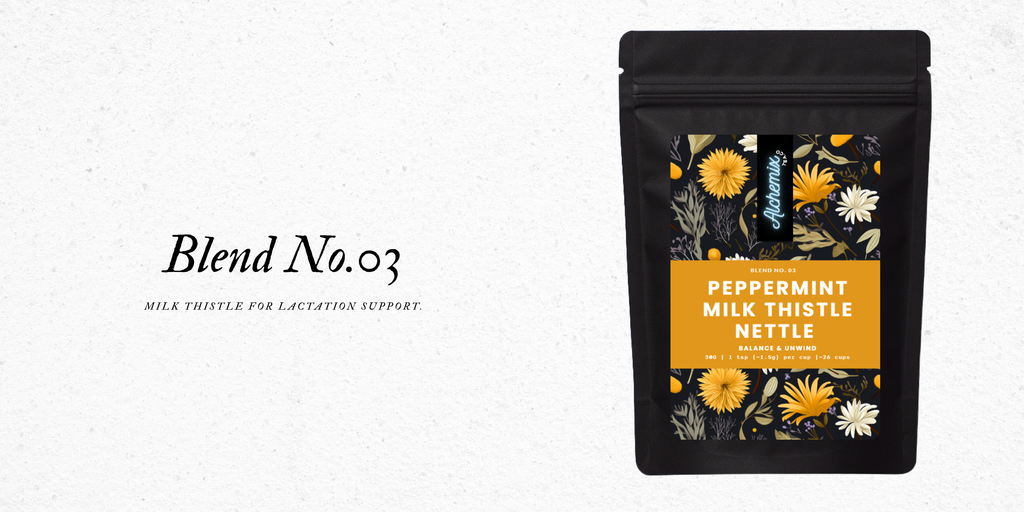
Our Blend No.03 includes milk thistle, but we haven’t built the entire tea around one botanical and a list of grand promises.
Instead, we’ve blended it with:
- burdock root
- lemon myrtle
- alfalfa
- peppermint
- liquorice root
- nettle leaf
- calendula petals
- orange peel
The milk thistle and burdock give the cup an earthy base. Peppermint freshens everything up, lemon myrtle brings a bright lemon character, and orange peel adds a clean citrus finish.
Liquorice root gives the blend some natural sweetness, so the end result is smooth, fresh and botanical rather than aggressively earthy.
In other words, it tastes like something you’d actually want a second cup of.
What about the liquorice root?
Because Blend No.03 contains liquorice root, it’s worth covering this ingredient too.
LactMed’s liquorice guidance advises against long-term excessive consumption while nursing. Excessive liquorice intake has been associated with effects including raised blood pressure.
It’s a good example of why we look at the whole blend rather than getting fixated on one ingredient.
Milk thistle and breastfeeding FAQs
Can I drink milk thistle tea while breastfeeding?
Yes. Milk thistle has a long history of traditional use during breastfeeding, and the available lactation information is reassuring. LactMed’s breastfeeding assessment reports that silymarin components weren’t found in measurable amounts in breast milk in the studies it reviews and considers adverse effects in breastfed infants unlikely.
Does milk thistle increase breast milk supply?
Milk thistle has traditionally been used with the intention of supporting milk production. Research has also looked at purified silymarin preparations, although that isn’t the same as proving that drinking milk thistle tea increases breast milk supply.
Is milk thistle tea caffeine-free?
Milk thistle itself isn’t a source of caffeine. If you’re choosing a blend, check the other ingredients too.
Can I drink milk thistle tea every day?
There isn’t an established evidence-based daily amount specifically for milk thistle tea during breastfeeding. If you’re drinking a botanical blend regularly, consider all the ingredients rather than milk thistle in isolation.
Is milk thistle tea the same as taking a supplement?
No. Tea is prepared by infusing botanical material in water, while supplements often contain concentrated or standardised preparations. Research involving one shouldn’t automatically be applied to the other.
What does milk thistle tea taste like?
On its own, milk thistle has an earthy botanical character. We prefer it as part of a blend, where fresher ingredients such as peppermint, lemon myrtle and orange peel can balance those deeper notes.
A good cup doesn’t need a miracle claim
Milk thistle has a long history of traditional use during breastfeeding, and the available lactation research is reassuring. Its traditional connection with milk production is interesting too, even though modern research hasn’t established milk thistle tea as a proven way to increase supply.
For us, that doesn’t make milk thistle less interesting.
It means we can appreciate it for what it actually brings to a cup: an earthy botanical base that pairs beautifully with fresh herbs, citrus and roots.
That’s exactly what we’ve done with Blend No.03.
If peppermint, lemon myrtle and orange over a deeper botanical base sounds like your kind of brew, try Blend No.03. Real botanicals, loose leaf, naturally caffeine-free and, most importantly, worth drinking.
Related Articles




-
Reusable Tea Bags (Set of 5)
$ 15.00 -
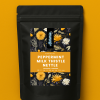
Blend No.03 - Peppermint, Milk Thistle, Nettle
$ 15.99 – $ 42.00 -
French Earl Grey
$ 19.00 – $ 49.00 -
Matcha Whisk (Chasen)
$ 25.00 -
Elderflower Tea
$ 15.00 – $ 39.00
 We do loose leaves that you can taste and non of that dusty stuff in a bag.